

What is it?
Drawing Conversations is a visual facilitation toolkit designed to support communication between professionals and people they work with, particularly those navigating life across cultures, languages, and borders. It supports communication with those who have limited experience of therapy and/or find verbal expression difficult.
It is
-
A tool to support practitioners and frontline workers
-
Designed for cross-cultural and multilingual settings
-
Suitable for one-to-one or group work
-
Useful for reflection, trust-building and support planning
It is not
-
A substitute for interpreters
-
A diagnostic tool
-
It's not a game. But it can be turned into one if you are creative!
-
Not prescriptive. There are no correct answers or expected responses.
What is included?
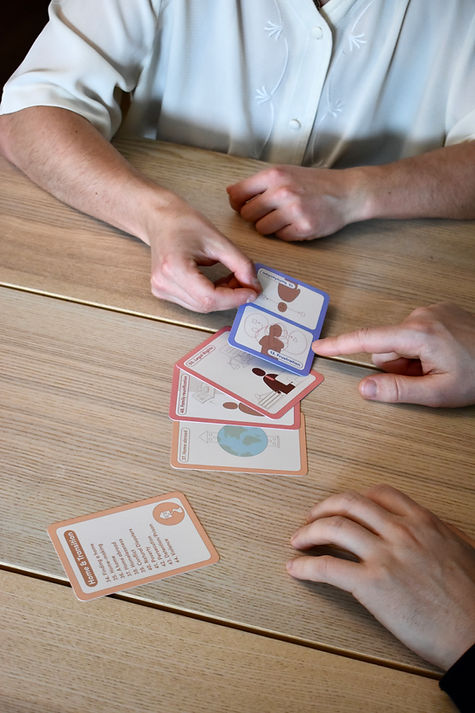
Drawing Conversations is a toolkit designed to help facilitators spark meaningful dialogue. When you purchase it, you receive:
-
the illustrated card deck
-
a booklet with ideas, inspiration, and instructions
-
a tailored training session to help you use it confidently and effectively.


The card deck
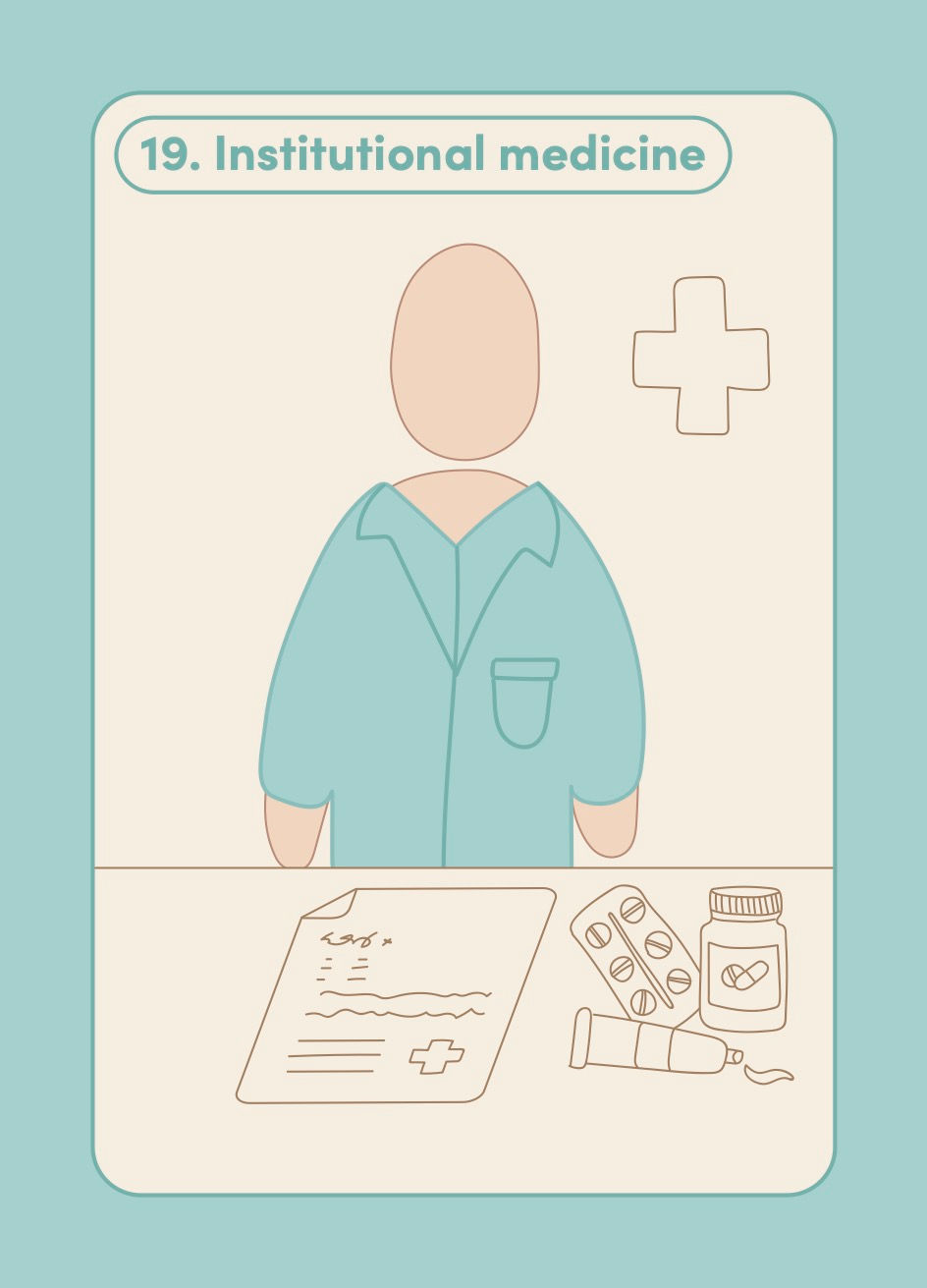
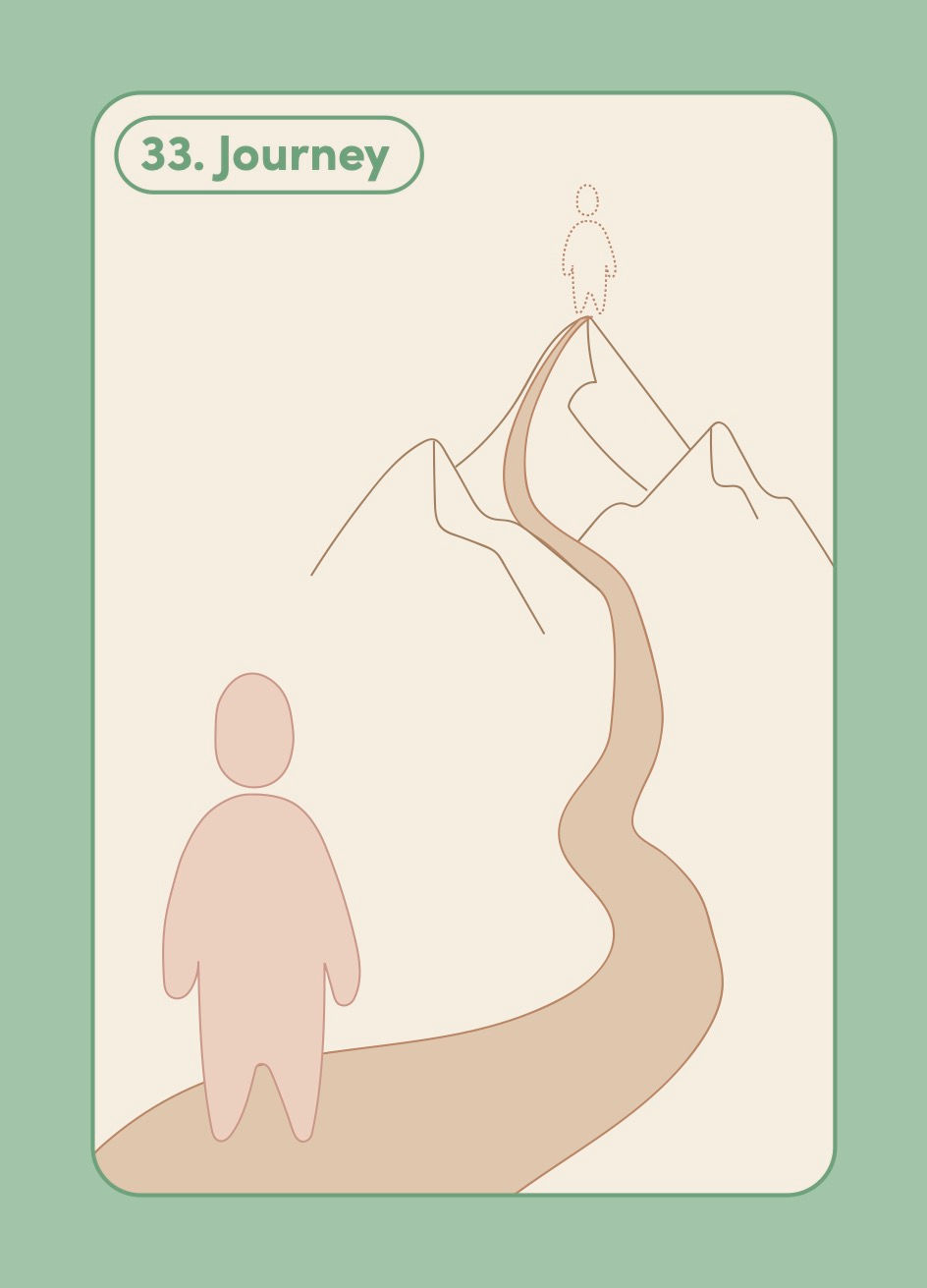
Each card represents a different real-life scenario that people may be experiencing, as well as a set of emotion cards to add meaning to those scenarios. The illustrations are open-ended, symbolic and gently evocative. Through a trauma-informed design approach they support interpretation, storytelling and reflection across cultural and linguistic contexts.
The deck contains seven themes:
-
Emotions - pairs of opposite emotions to locate and express feelings
-
Health- physical and mental well-being, care and access
-
Development- education, work, aspirations and personal growth
-
Home and transitions - moving, settling, leaving and belonging
-
Legal - borders, immigration systems, rights and procedures
-
Friends and family - Connection, separation, families and friendships
-
Culture - identity, belonging, language, beliefs and behaviours
It also contains three blank cards that you or your client can tailor to their needs.




Why use visual communication?
Many people navigating migration, displacement, trauma, language barriers or unfamiliar systems may struggle to express feelings, needs and personal stories through words alone.
Drawing Conversations gives facilitators a structured, gentle and visual way to support reflection, trust-building and emotional expression. It can help with:
-
supporting meaning-making beyond shared vocabulary
-
holding space for stories that aren’t linear
-
making legal, health and social systems easier to discuss
-
opening conversations about home, community and identity.
How can I use it?

Needs, Barriers, and Systems
Use the cards to conduct need assessments. Select cards from different categories, for example money, home, family, visa, work, health. They can be used for an initial signposting or to start a conversation.
Who is it for?
Drawing conversations can be applied to various situations and contexts where .
Some examples of it's application include:
-
Refugee & migrant charities - support casework, group work or drop-in spaces
-
Therapists, counsellors, and NHS - supporting clients when verbal expression is difficult
-
Social workers & support staff - open conversations about home, family and need
-
Cultural mediators & interpreters - use as a warm-up or to support clarification
-
ESOL teachers & adult colleges - build confidence and emotional vocabulary alongside language
-
Schools, councils & youth workers - help young people explore identity and belonging through self-expression.
Curious to know whether you can use the cards in your organisation? Contact us
The training
As any projective and creative tool, the role of the facilitator is key. The cards don't replace your practice but rather complement it. It’s your sensitivity, experience, and ability to hold space that bring the conversations to life.
That’s why every purchase of Drawing Conversations includes dedicated training. This gives you and your organisation the chance to explore the cards in depth, experiment safely with different ways of using them, and build confidence in integrating visual tools into your sessions. You will leave the session confident and ready to use the cards meaningfully in your work.

Customisation (add-on)
Want cards tailored to your community?
Work with our designer to create bespoke illustrations and prompts that reflect your service users and your team’s facilitation practice. Our designer can also lead trauma-informed co-design sessions with your service users to ensure they reflect their lived realities and desires.
Contact us to book a chat about our customisation services.

Contact us for more information
Email: support@themagicstork.com
We can book a discovery call with you to explore how we might deliver Drawing Conversations training to your organisations.
About us
Bringing expertise in psychology and design together, our team focuses on making conversations accessible and engaging.

Founder and Psychologist
Dr Valeria Giannuzzi CPsychol, AFBPsS, Ph.D
Valeria is a multilingual psychologist, community facilitator, social researcher, and founder of The Magic Stork CIC. Her practice brings together mental health and migration, and aims at making mental health accessible and engaging. Valeria has supported refugees, asylum seekers, migrants, and different communities across research, clinical, and grassroots settings in the UK and internationally. She is passionate about tools that foster connection, uphold dignity, and create space for stories that cross borders.

Designer and Researcher
Dr Rute Fiadeiro
Rute is a design researcher working at the intersection of design (products and services) and situations of harm and trauma. Her design and research practice, grounded in trauma-informed practices, aim to explore how design can support people to understand and address harm. Rute has applied her expertise in many contexts from the NHS to the UK Government. She also works as a domestic abuse helpline volunteer in her free time.